

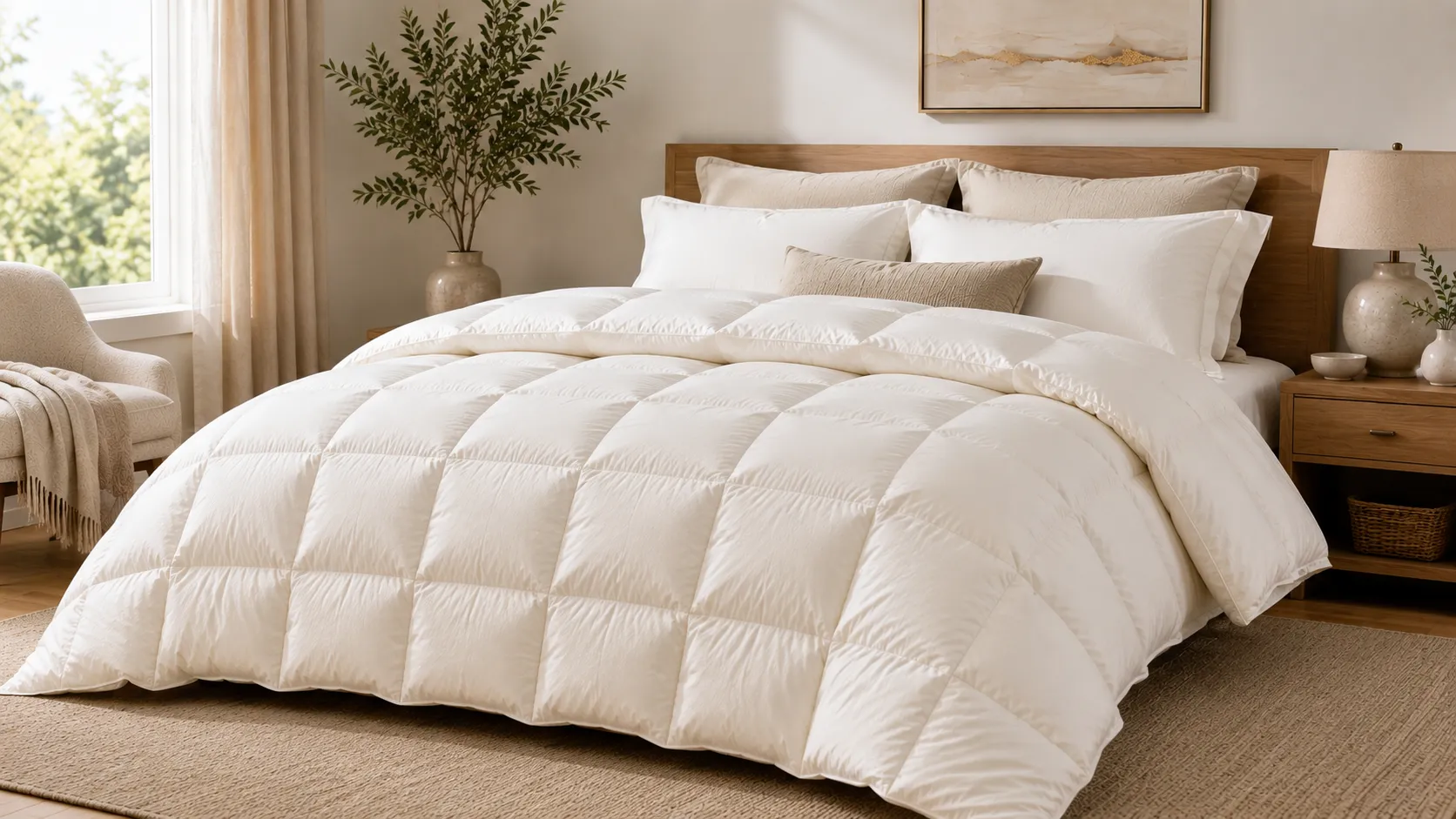
If you’ve ever wondered whether a down comforter is the same as a duvet, an insert, a blanket, or a full bedding set, you’re not alone. For many shoppers the challenge isn’t finding a comforter—it’s choosing the right one for your bed size, sleep temperature, season, style, and budget without ending up too hot, too cold, or disappointed by flat, underwhelming bedding.
At Warmy & Tummy, we believe better sleep starts with better layering. A premium down comforter should feel cloudlike, regulate temperature beautifully, and make your bedroom look as inviting as it feels. Whether you’re shopping for a queen for everyday comfort, an all-season king, or organic bedding, this guide helps you choose with confidence.
What Is a Down Comforter?
A down comforter is a bed covering filled with the soft, airy clusters found beneath the outer feathers of ducks or geese. Those clusters create loft, trap warmth efficiently, and give down its signature lightweight-yet-insulating feel. In short, it’s a premium top layer that keeps you warm without heavy bulk. People love down because it feels light but warm, drapes beautifully, works across multiple seasons, and pairs easily with duvet covers for style and protection.
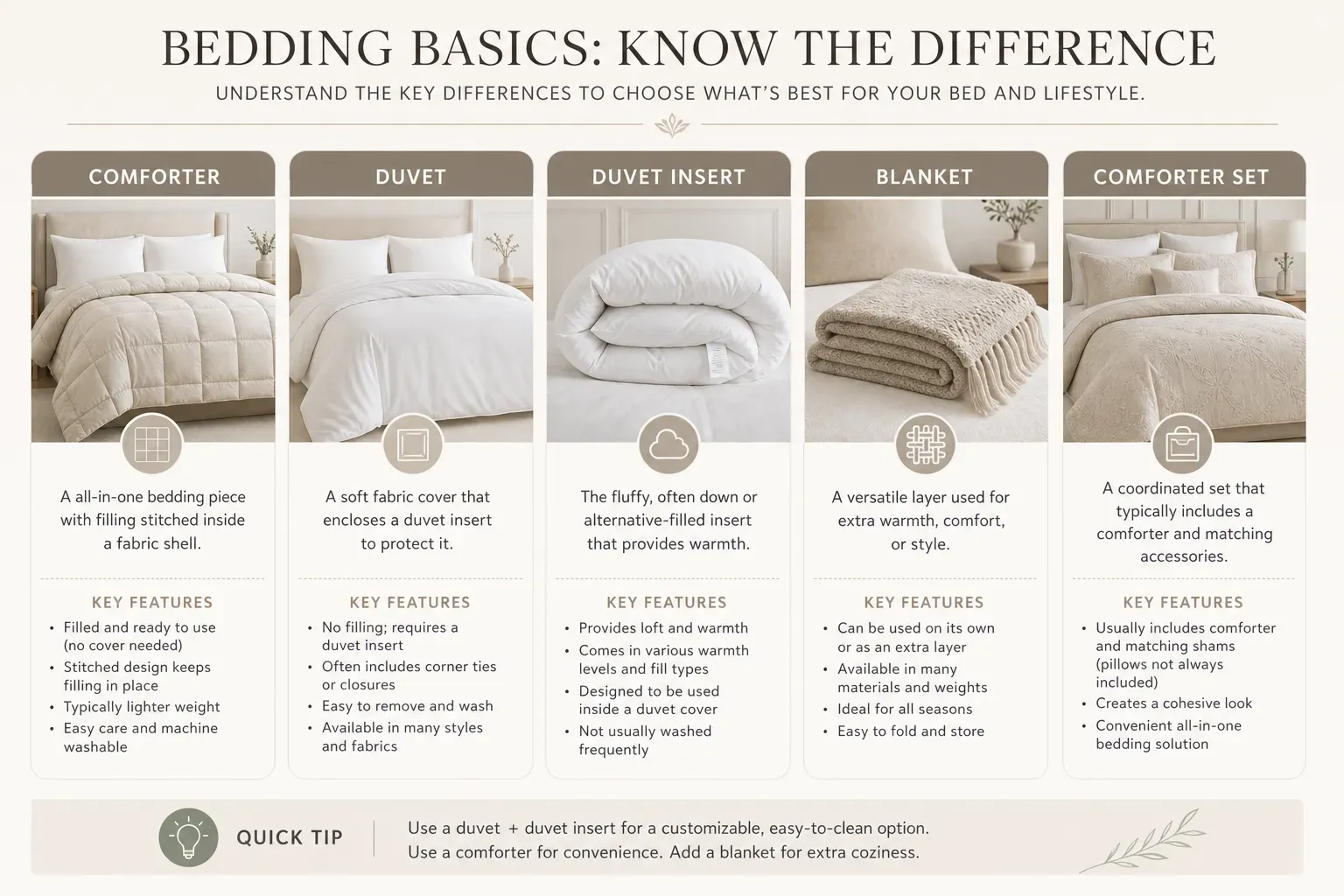
Down Comforter vs. Duvet vs. Insert vs. Blanket vs. Set
Stores often use these terms loosely, so here’s the practical difference.
|
Term |
What it means |
Best use |
|
Down comforter |
A filled comforter made with down |
Everyday luxury warmth |
|
Duvet |
Another word for comforter, or the insert used inside a cover |
Layered bedding systems |
|
Duvet insert |
The filled inner piece for a duvet cover |
Clean, flexible styling |
|
Blanket |
Thinner and less lofty |
Extra layer, mild weather |
|
Comforter set |
Comforter plus matching pieces |
Easy bedroom styling |
Is a down comforter the same as a duvet insert? Sometimes—if it has the right dimensions and corner loops for a cover. A comforter set, meanwhile, adds matching shams or coordinated pieces for a ready-made bed.
Why a Good Down Comforter Feels Better Than a Basic One
Not all down feels the same. Five factors drive the difference: fill power (loft and lightness), fill weight (how warm it actually feels), shell fabric (breathability and hand-feel), construction (how evenly the down lofts), and fit (how it drapes and covers). Sourcing matters too—the Responsible Down Standard (RDS) ensures down comes from ducks and geese treated humanely, prohibiting live-plucking and force-feeding.
Best Down Comforter Sizes
Size is one of the most important decisions you’ll make. Too small and the bed looks skimpy; too large and the comforter can slide around inside the cover.
|
Bed Size |
Recommended Comforter |
Best for |
|
Full |
Full or oversized Full/Queen |
Solo sleepers, guest rooms |
|
Queen |
Queen or oversized Queen |
Most couples, primary bedrooms |
|
King |
King |
Standard king beds |
|
California King |
Cal King |
Longer, narrower king beds |
Queen is often the most versatile—polished and hotel-like, and usable on a full bed for an oversized look. King gives broad coverage for couples, and cal king suits longer, narrower mattresses. If you share a bed or want more side drape, sizing up is a smart move.
Best Warmth Levels by Season
Warmth is personal—it depends on your climate, sleep temperature, and bedroom setup. Lightweight suits warm sleepers, summer, and mild climates; all-season is the practical year-round favorite for temperature-controlled homes; and extra-warm is ideal for cold sleepers and drafty winter rooms. Healthline notes that experts recommend keeping the bedroom between 60°F and 67°F to support deeper rest—so the right weight matters, since even a beautiful comforter won’t feel luxurious if it makes you overheat.
How to Choose by Sleep Style
Hot sleepers should look for lighter fill weights and breathable shells like organic cotton, linen, silk blends, or cooling fabrics; a lightweight cooling layer is often a better fit than a plush winter fill. Cold sleepers should choose a warmer, loftier build. Couples can split the difference with a balanced all-season option or size up for better coverage and drape.
Best Materials for a Premium Down Comforter
Fill matters, but the fabric touching your skin shapes breathability, softness, and the nightly experience. Organic cotton is soft, breathable, and eco-friendly—our organic cotton down comforter is a clean, responsible choice. Silk feels smooth and temperature-aware; linen is relaxed and breathable for warmer rooms; cooling performance fabrics wick moisture for sleepers who overheat; and classic cotton is durable and easy to layer with covers and sheets.
Fill Power Explained Simply
Fill power measures how much space one ounce of down occupies—higher numbers usually mean better loft and warmth efficiency, not automatically a hotter comforter. Think of 600–650 as good everyday loft, 700 as an excellent balance of value and luxury, and 850 as exceptionally lofty and light. Both 700 and 850 can be wonderful; the better choice depends on your budget and how premium you want the feel.
Construction Types: Why Loft and Warmth Change
Sewn-through designs stitch the top and bottom layers directly together—simple and affordable, but with cooler spots along the seams. Baffle-box construction uses internal walls to create chambers that let the down loft fully and distribute evenly. For that plush, hotel-inspired finish, baffle box is usually worth the upgrade.
What to Pair With a Down Comforter
A comforter works best as part of a complete sleep system. A duvet cover protects it and makes restyling easy. Breathable sheets should complement the warmth level—cooling for hot sleepers, softer insulating layers for cool rooms. Add coordinated pillows for both looks and support, and a throw for transitional weather.
How to Care for a Down Comforter
Cared for well, a premium down comforter lasts for years. Use a duvet cover, air it out regularly, follow washing instructions carefully, store it uncompressed in a breathable bag, and avoid unnecessary washing. As the Sleep Foundation notes, a high-quality down comforter can last 10 to 15 years—or even longer—with proper care, which is why so many sleepers see it as a worthwhile investment.
Final Verdict
A down comforter is one of the smartest upgrades you can make for better sleep, better temperature balance, and a more beautiful bedroom. The right choice depends on your bed size, warmth preference, fabric feel, and whether you want a standalone comforter, a duvet insert, or a coordinated set. If you’re ready to move beyond guesswork, explore Warmy & Tummy’s premium down comforter collection for luxury materials, personalized options, sustainable choices, and a sleep-first approach to building the bed you actually want to come home to.
FAQ
What is the difference between 700 and 850 fill down comforters?
700 fill offers an excellent balance of loft, warmth, and value, while 850 fill feels lighter, loftier, and more luxurious. Both can be warm, but 850 usually delivers more insulation efficiency with less weight.
What size down comforter should I get?
Choose based on your mattress size and desired drape. Queen works for most couples, king gives broader coverage, cal king fits longer mattresses, and sizing up helps if you want a fuller, more luxurious look.
What is considered a good down comforter?
A good down comforter has quality down fill, a breathable shell, even construction, and the right warmth level for your sleep style. Baffle-box construction, premium fabrics, and a strong return policy add value.
How warm is a 650 fill down comforter?
A 650 fill comforter offers solid everyday warmth and comfortable loft, especially in moderate climates or heated bedrooms. Its actual warmth still depends on fill weight and construction, not just the fill-power number.